Quick answer: Senior independence means having the ability to safely perform everyday activities and continue living comfortably in your own home while maintaining control over daily life. The right home accessibility upgrades (such as walk-in showers, stair lifts, and safer entryways) make that possible without sacrificing comfort or style.
Most people picture independence as simply living alone. However, for seniors, it runs much deeper than that. It’s about waking up in your own bed, following the morning routine you’ve had for decades, and moving through your day without asking for help, or worrying about whether you should.
Your home plays a bigger role in that picture than most people realize. The right design supports your freedom. The wrong design quietly chips away at it. The difference between the two often comes down to a few thoughtful changes.
At Home Mobility Pros, we help Rhode Island homeowners create accessible spaces that protect what matters most: dignity, confidence, and the ability to age in place on your own terms.
What Does Senior Independence Really Mean for Seniors?

Independence means continuing to enjoy the daily activities that bring purpose and joy.
Senior independence isn’t a single thing. It’s a collection of small, daily freedoms that together form the foundation of a fulfilling life.
It means staying in the home you love; surrounded by familiar rooms, neighbors, and routines. It means making your own choices about when to eat, when to rest, and how to spend your day. It means completing everyday tasks without waiting for someone else’s help, and doing so with confidence rather than anxiety.
Social connection matters too. Seniors who maintain their independence tend to stay more engaged with family, friends, and their communities. That engagement protects both mental and physical health. Isolation, on the other hand, is a well-documented risk factor for cognitive decline and depression in older adults.
When a home no longer supports these freedoms, the effects show up fast, not just physically, but emotionally. That’s why the conversation about senior independence has to include the home itself.
How Your Home Can Support Independence
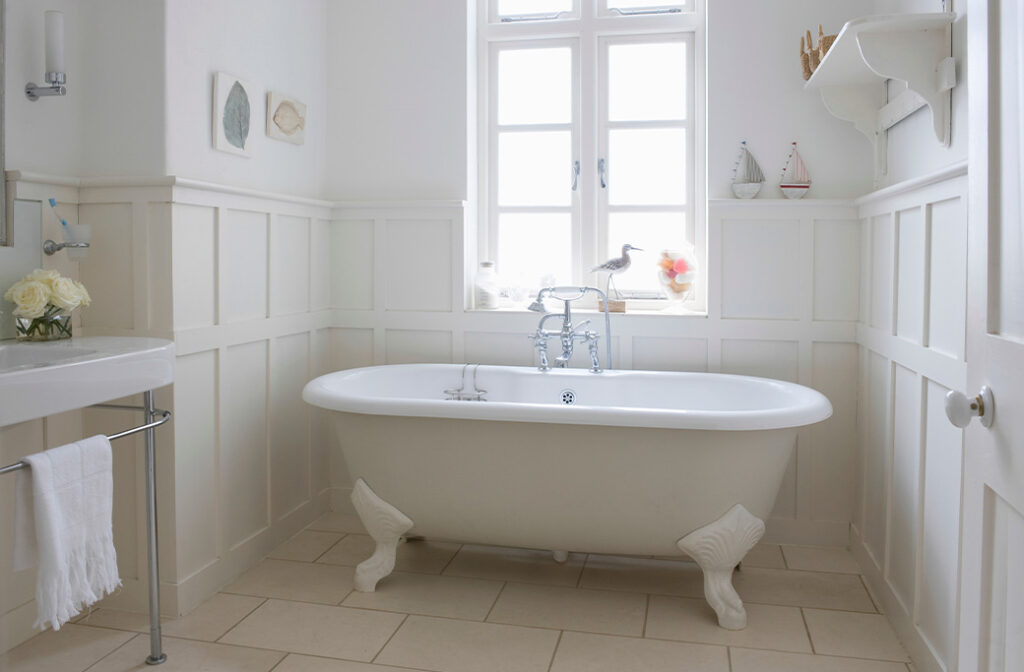
Common household features can become barriers as mobility changes over time.
Here’s a truth that often surprises homeowners: the features that made a home functional at 40 can become genuine obstacles at 70. Not because a person has failed, but because the home hasn’t kept up.
High bathtub walls require significant balance and flexibility to step over safely. Narrow doorways make it difficult to move through the home with a walker or wheelchair. Stairs become a daily negotiation—manageable on good days, daunting on bad ones. Slippery flooring, poor lighting in hallways, and uneven entryways each carry their own risks.
What’s easy to miss is that these barriers affect confidence long before they cause an injury. A senior who hesitates at the top of the stairs or grips the wall to navigate a dark hallway has already started to feel less at home in their own house. That shift in confidence has real consequences for independence and quality of life.
The good news: these are solvable problems. Solving them proactively is far better than waiting for an accident to force the conversation.
Home Accessibility Is the Foundation of Aging in Place
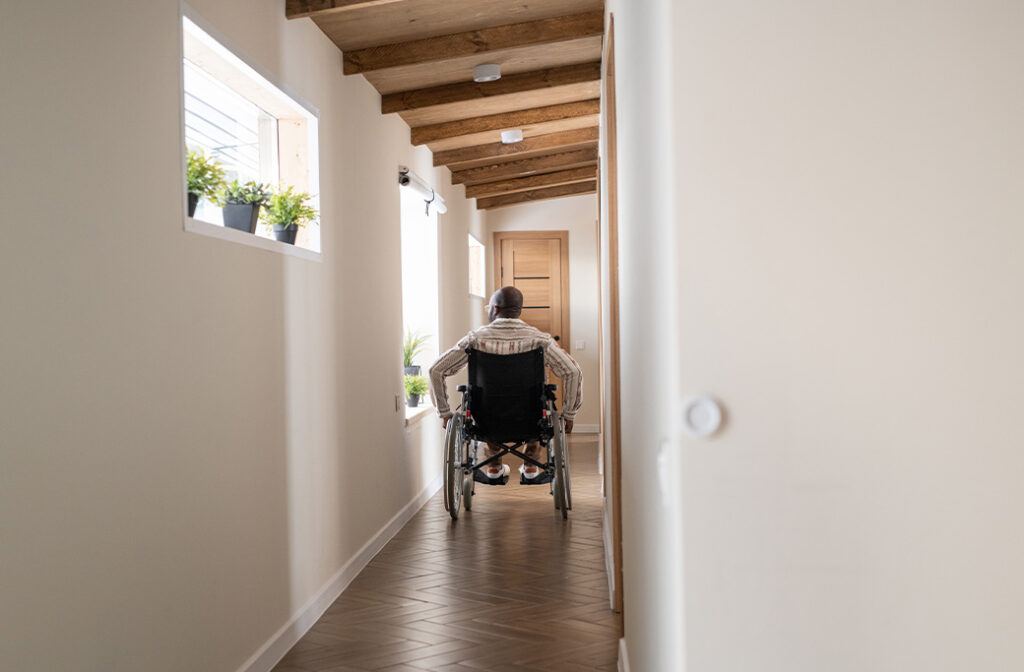
Thoughtful accessibility upgrades help homeowners age safely and comfortably in place.
Accessibility upgrades are sometimes misunderstood as a last resort—something you turn to after independence has already been lost. The reality is the opposite. Home accessibility is what preserves independence.
Proactive planning means you shape your home around your life, rather than reshaping your life around your home’s limitations. A walk-in shower installed before a fall is a comfort. The same installation after a fall is a necessity. The difference in timing is the difference between choice and urgency.
Home accessibility allows homeowners to adapt their homes to their changing needs without sacrificing comfort or style. Modern accessibility design has come a long way. Today’s grab bars, roll-in showers, and stair lifts are built to blend seamlessly into well-designed spaces. Safer daily routines, greater confidence, and peace of mind for both seniors and their families are the results.
Aging in place doesn’t mean staying in a home that no longer works for you. It means creating a home that works for you at every stage of life.
Accessibility Upgrades That Help Seniors Stay Independent
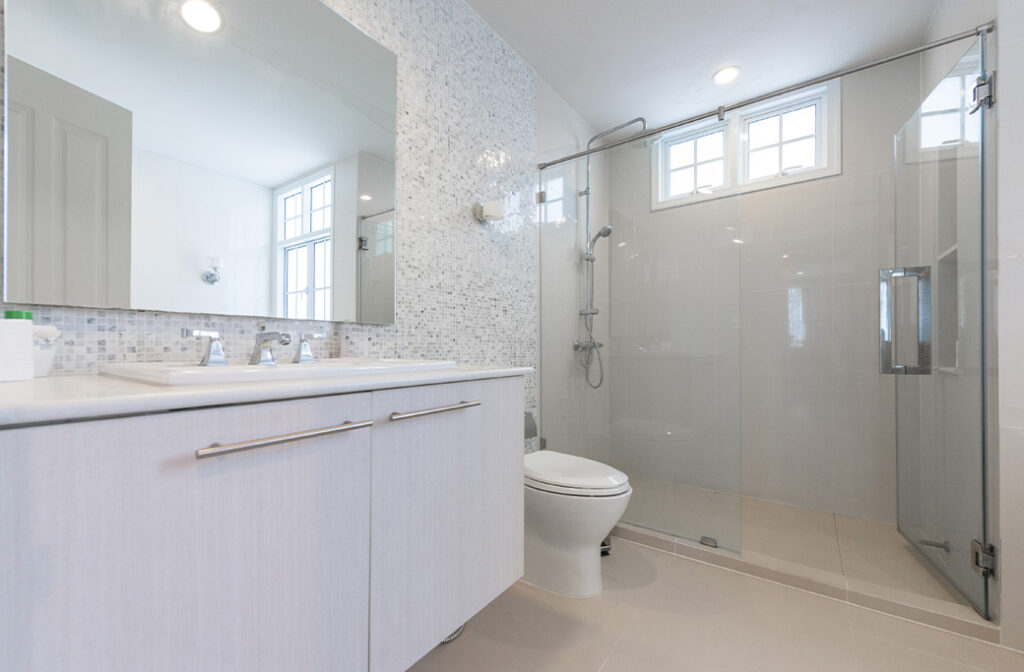
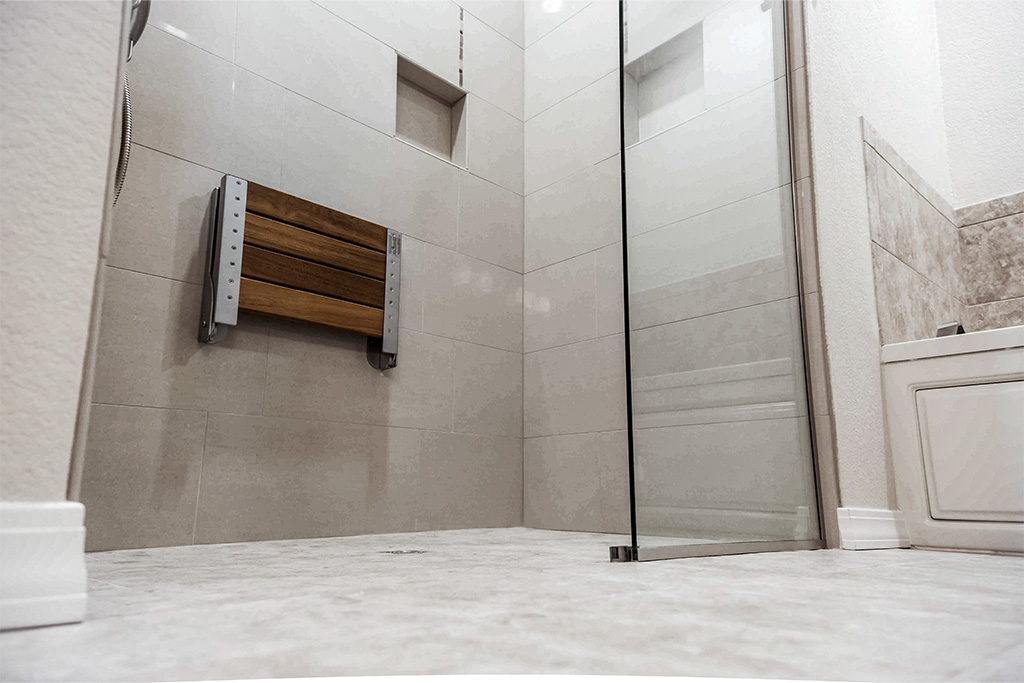
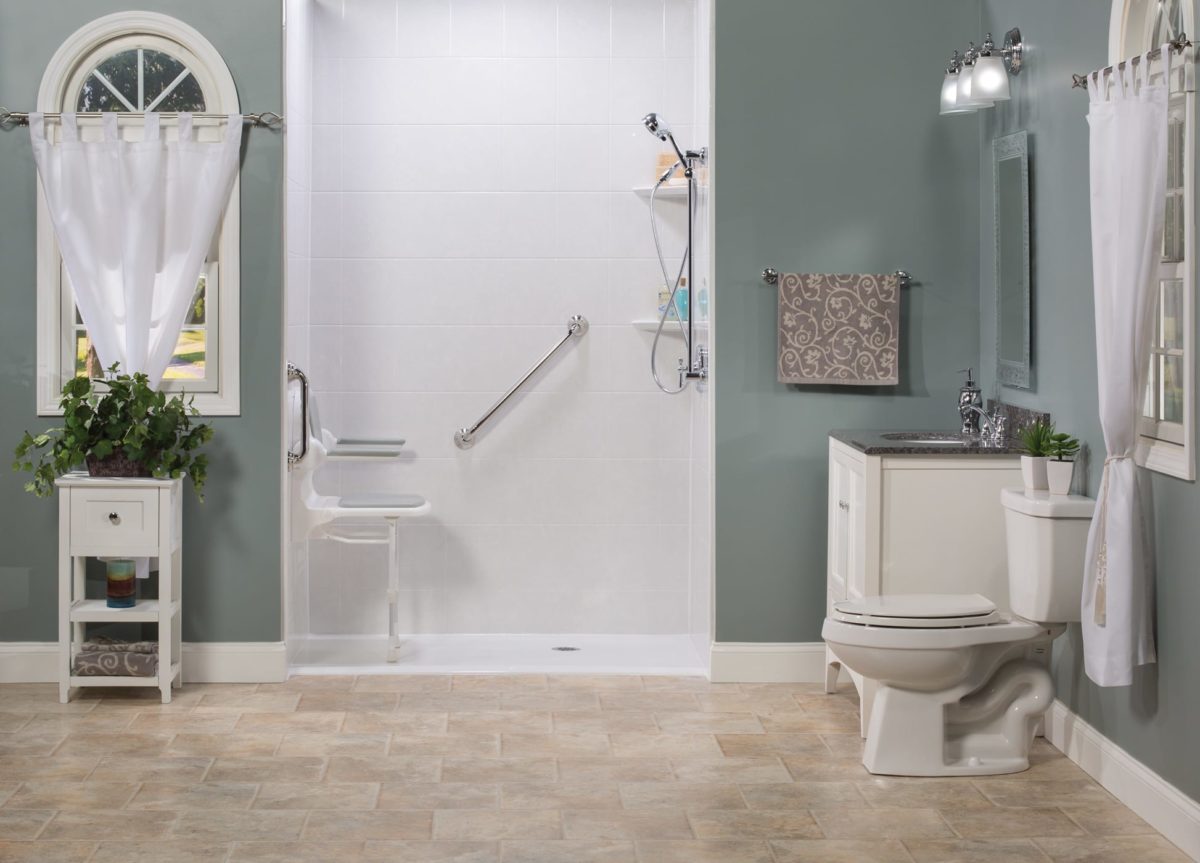
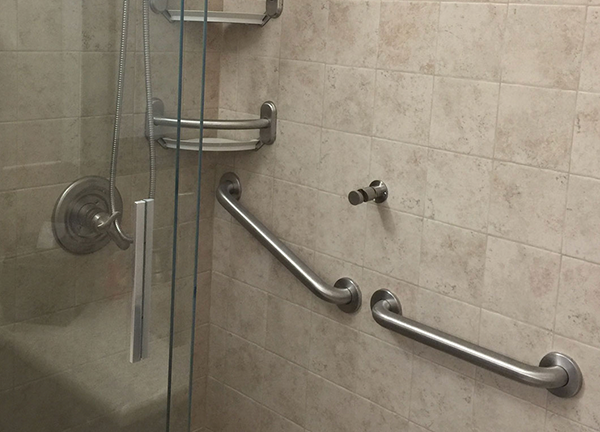
Today’s accessible bathrooms combine safety, comfort, and modern style.
Safer Bathrooms
The bathroom is statistically one of the most hazardous rooms in the home for older adults. It’s also one of the most important to get right. Key upgrades include:
-
- Walk-in showers that eliminate the need to step over a tub threshold
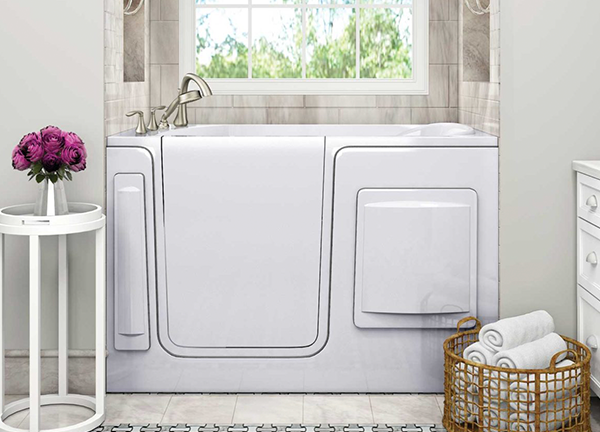
- Walk-in tubs with low-entry doors for those who prefer a bath
- Grab bars positioned at entry points, along walls, and near the toilet
- Comfort-height toilets that reduce strain on joints and improve ease of use
- Non-slip flooring that provides traction even when wet
These changes work together to create a bathroom that feels safe and functional without looking institutional.
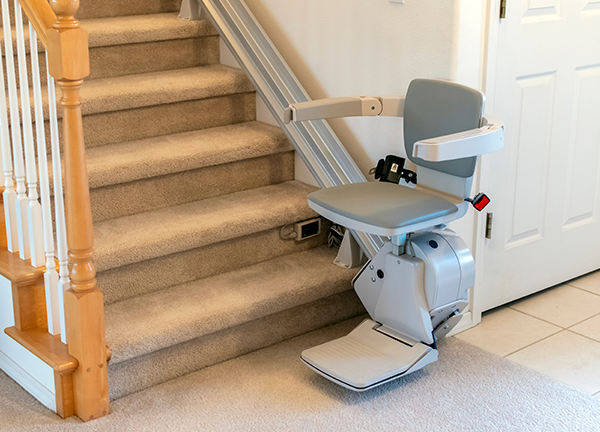
Stair Lifts
For seniors in multi-level homes, stairs can become the single biggest barrier to maintaining full use of their space. A professionally installed [stair lift] solves that problem directly. Stair lifts allow homeowners to move between floors safely and comfortably, reduce fall risk significantly, and eliminate the anxiety that often builds around stair navigation. Many of our Rhode Island clients describe the difference as transformative—suddenly, the whole house is accessible again.
Accessible Entryways
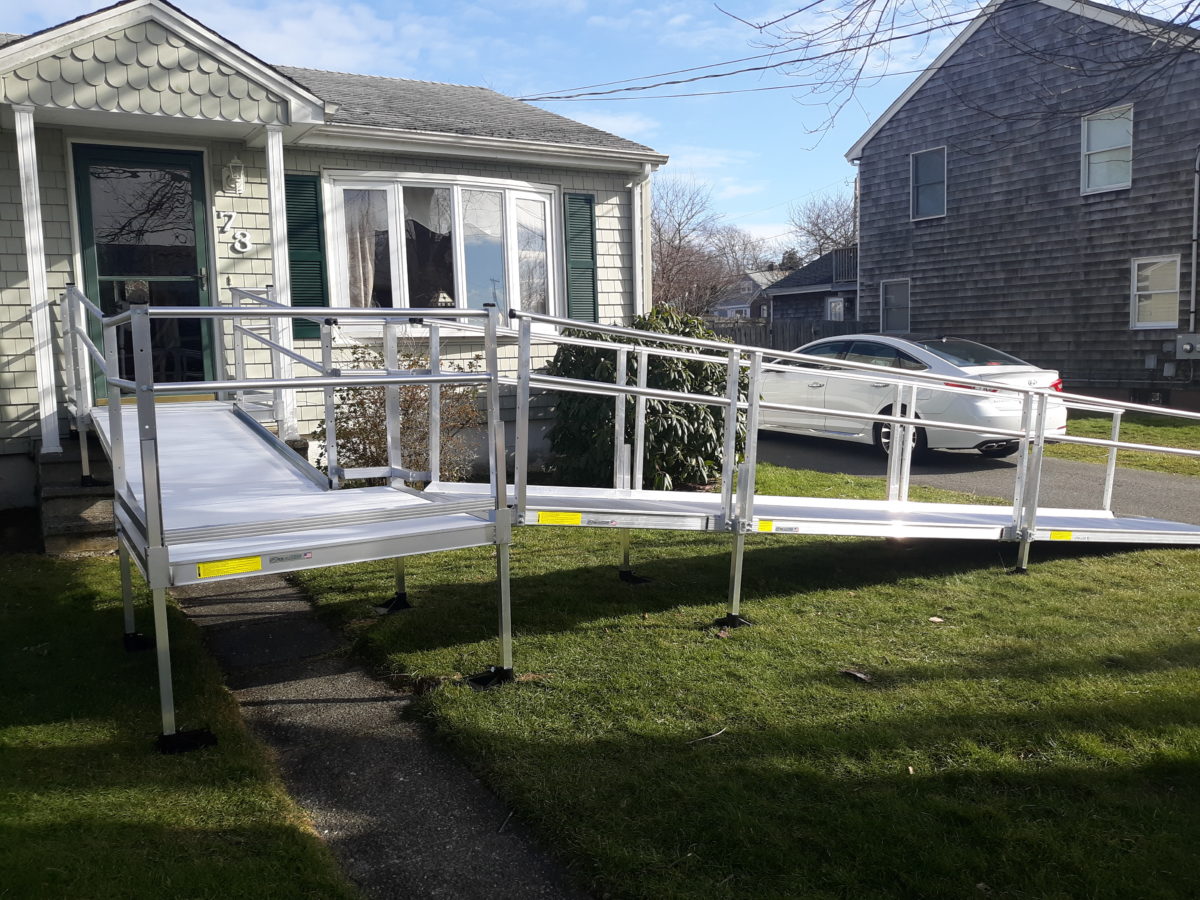
Getting in and out of the home safely is a fundamental part of independent living. Accessible entryway upgrades include:
-
- Wheelchair ramps to replace steps at primary entrances
- Handrails on both sides of any remaining steps
- Wider walkways to accommodate walkers, wheelchairs, or mobility aids
- Threshold modifications to eliminate raised edges that create trip hazards
These improvements also make a home more welcoming for visiting family members with mobility needs. [Learn more about our wheelchair ramp installations.]
Better Lighting
Poor lighting is an underestimated contributor to falls and reduced confidence at home. Targeted lighting improvements in hallways, bathrooms, and entryways dramatically reduce risk. Motion-sensor lighting ensures that a nighttime trip to the bathroom doesn’t require fumbling for a switch in the dark. Improved outdoor lighting makes evening arrivals and departures safer year-round.
Why Independence Benefits the Entire Family
When seniors feel safe and confident at home, the ripple effects extend to everyone around them.
Caregiver stress decreases when family members don’t need to worry about daily safety risks. Fewer accidents mean fewer emergency calls, fewer hospital visits, and fewer disruptions for everyone involved. And seniors who maintain their independence tend to stay more connected—to their families, their friends, and their broader community.
Peace of mind isn’t just something seniors feel. It’s something families feel too. Home accessibility upgrades are one of the most effective ways to give it to everyone at once.
Why Rhode Island Homeowners Choose Home Mobility Pros
Home Mobility Pros brings a unique combination of local expertise, accessibility knowledge, and genuine care to every project.
Every homeowner we work with starts with a personalized accessibility assessment. Our team evaluates your home’s current layout, identifies the areas that pose the greatest risk, and develops solutions tailored specifically to your needs and your lifestyle—not a one-size-fits-all checklist.
From professional installation of grab bars and bathroom safety features to walk-in tubs, walk-in showers, stair lifts, and wheelchair ramps, we handle the full scope of home accessibility upgrades with precision and care. Our designs are built to be beautiful and functional—because a safer home should still feel like your home.
We also help Rhode Island homeowners navigate available funding options. Learn about the Rhode Island Home Modification Grant to find out whether your project may qualify for financial assistance.
Founder Mike Duckett spent a decade building fully accessible homes for severely wounded Veterans across the country. That experience shaped a deep understanding of how thoughtfully designed spaces can transform lives, not just for the people living in them, but for everyone who cares about them.
Independence Begins at Home
True independence isn’t measured by doing everything alone. It’s about having a home that supports your lifestyle, protects your safety, and gives you the confidence to continue living life on your own terms.
At Home Mobility Pros, we’re passionate about helping Rhode Island homeowners create accessible spaces that promote independence, dignity, and peace of mind. Whether you’re planning ahead or adapting to changing mobility needs, our team is here to help you build a home that’s ready for every stage of life.
Schedule your free home accessibility assessment today and take the first step toward a safer, more comfortable home.